
Your estate plan is only as strong as the conversations behind it. Creating a thoughtful framework for the future is a meaningful step, but communication brings it to life. Without it, beneficiary designations may be misunderstood, key decisions second-guessed, and relationships strained under the weight of confusion or unmet expectations.
At Trust Point, we’ve seen what happens when conversations don’t take place — and how powerful it can be when they do. Whether you’re finalizing your estate plan or just beginning to think through your legacy, clear and timely communication with your beneficiaries can make all the difference.
The Case for Clarity
It can be difficult to talk about money and mortality. Some worry about causing tension among family members, while others may feel nervous sharing financial details. But waiting too long, or ignoring the conversation completely, can cause more harm than good for your beneficiaries.
Even limited transparency can go a long way toward easing concerns and setting expectations. The right conversation, at the right time, helps:
- Prevent misunderstandings and disputes
- Explain your rationale
- Prepare loved ones for future roles
- Build trust across generations
Ultimately, this is about honoring your intentions, reducing friction, and supporting your family through a major transition.

The goal is to help your loved ones understand your intentions and the structure you’ve put in place.
Lay The Groundwork Early
Start with a clear, up-to-date estate plan. This includes a will or trust, financial and medical powers of attorney, and healthcare directives. Then, consider who should be involved.
Ask yourself: Who will carry out my wishes? Who needs to understand their future responsibilities? How much detail am I ready to share?
Every family dynamic is different. Some parents choose to include only their adult children; others involve in-laws, extended family, or even future generations. What matters most is that the people impacted by your plan have the opportunity to hear directly from you.
Set the Stage for a Productive Dialogue
We encourage clients to schedule a separate, dedicated meeting, rather than folding the beneficiary discussion into a holiday gathering or family event. While it might feel efficient to discuss it over dinner at Thanksgiving, these topics deserve their own space and attention.
Here are a few ways to set the stage:
- Choose a quiet, neutral setting
- Give advance notice
- Use visual tools like family trees or
timelines to clarify details - Involve a professional, like one at Trust Point, to help guide the conversation as a neutral third party
Remember, you don’t have to share specific dollar amounts. The goal is to help your loved ones understand your intentions and the structure you’ve put in place.
Guidance Without Bias
In many cases, bringing in a neutral third party can help alleviate some of the pressure. At Trust Point, we serve as an objective liaison, helping explain how the estate plan works, clarifying terminology, and answering questions in real time. Most importantly, we help keep the conversation focused and constructive.
We also offer tools to support these discussions, including:
- A visual map of how assets willbe distributed
- A glossary of key roles and responsibilities
- Step-by-step checklists for beneficiaries
These resources help create a shared understanding and fewer surprises.
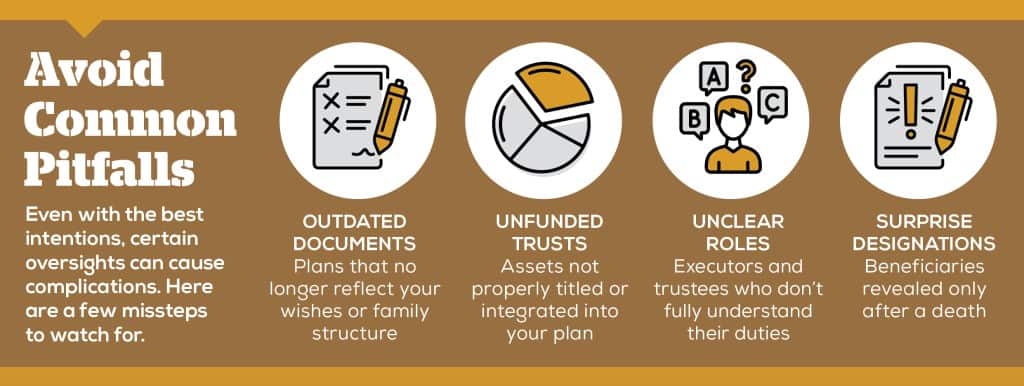
Carry Your Legacy Forward
You don’t need to cover everything in one family meeting, but starting the conversation opens the door to greater transparency, stronger relationships, and better outcomes.
Talking to your beneficiaries is one of the most meaningful ways to protect your family and preserve your values. And remember — your plan isn’t static. Revisiting it regularly, and keeping loved ones in the loop, helps ensure it reflects your goals over time.
Did you like this article? Explore more insights and stories from the Trust Point Magazine, designed to help you simplify and secure your wealth. Request Your Complimentary Copy
By Christine Schmidt, CFP®, Senior Managing Director – Family Office & Leslie Meulemans, CPA, Team Lead – Wealth Management