
What is Direct Indexing?
Direct indexing is an investment strategy where you own individual stocks selected to closely track an index, such as the S&P 500. With a traditional index fund or ETF, you own shares of a fund that tracks an index. With direct indexing, you own many of the individual stocks inside the index directly in your own account. This structure can give some investors more flexibility, especially in taxable investment accounts.
Potential Benefits of Direct Indexing
- Tax-Loss Harvesting: By owning the individual stocks within an index, you may be able to sell losing positions to help offset realized capital gains, even in years when the overall index is up.
- Diversifying Around Existing Holdings: Direct indexing may help diversify existing portfolios or concentrated stock positions by adding exposure in areas not already represented or by selecting holdings that provide greater diversification from current investments.
- Personalization: Direct indexing may allow investors to emphasize certain investment factors or exclude companies or industries they do not want to own.
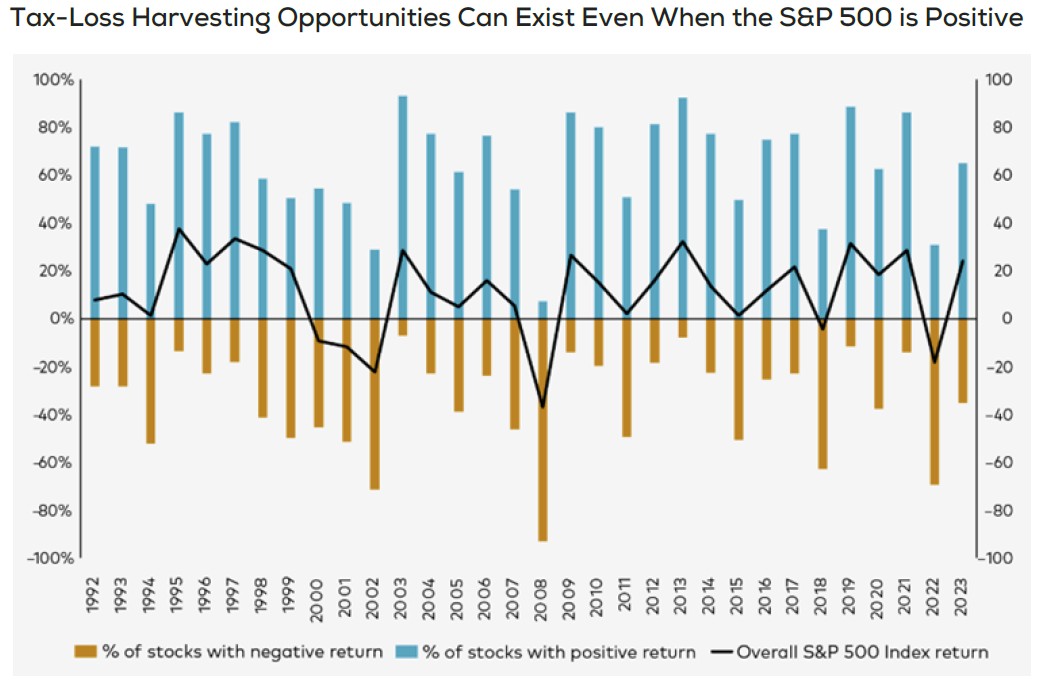
representation of any particular investment, as you cannot invest directly in an index. Source: FactSet, as of December 31, 2023
Tax-Loss Harvesting in Action
Even when the S&P 500 is positive for the year, not every stock inside the index is up. In many years, the overall index has gained while some individual stocks within the index have declined. Those declining positions may create opportunities for tax-loss harvesting.
With direct indexing, those individual losing positions may be harvested and used to help offset realized capital gains, while the portfolio remains broadly aligned with the investor’s long-term investment strategy.
Key Takeaway: Tax-loss harvesting opportunities may exist even when the overall market is positive.
What is Tax Alpha?
Tax alpha is the added value an investor may receive from tax-saving strategies, such as tax-loss harvesting. In direct indexing, this value may be enhanced from using losses within individual holdings to help offset realized taxable gains.
Is Direct Indexing for You?
Direct indexing is often most useful for investors with taxable investment accounts, concentrated stock positions, or specific tax-planning goals. It may also appeal to inv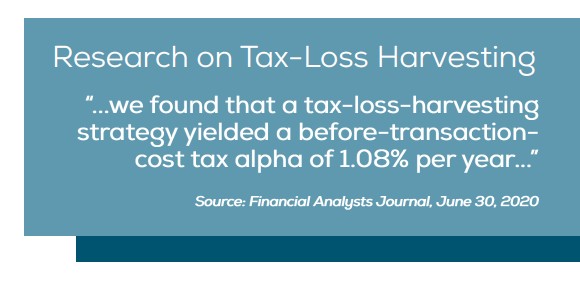 estors who want their portfolios to reflect specific values or personal preferences.

Explore Personalized Investment Management
Direct indexing is just one of many strategies that may help investors improve tax efficiency and build a portfolio aligned with their financial goals. The right approach depends on your unique circumstances, investment objectives, and long-term plan.
At Trust Point, our investment professionals create personalized investment strategies designed to simplify and secure your wealth.
Explore our Investment Management Services.